
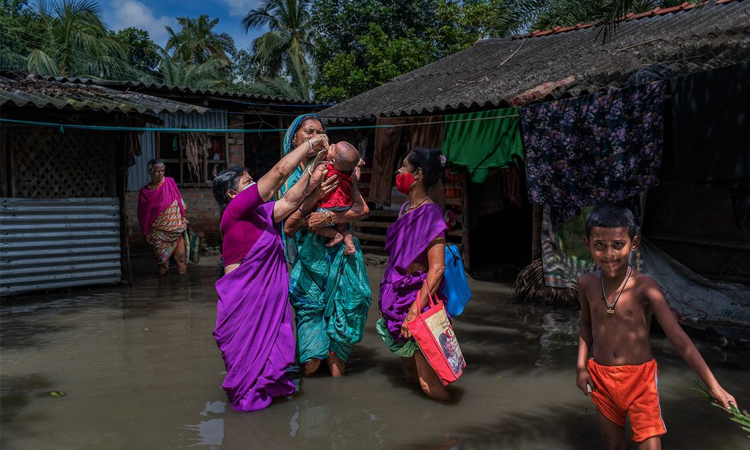
 As climate change continues to intensify environmental risks across the country, Bangladesh has placed infrastructure development, food security and water resource management at the heart of its climate resilience strategy in the proposed Fiscal Year 2026-27 (FY27) national budget.
According to budget documents, the Local Government Division (LGD), the Ministry of Agriculture and the Ministry of Water Resources have been assigned the largest share of climate-related spending, collectively accounting for more than 53 percent of the total climate allocation of Tk 51,746 crore.
Presenting the budget, Finance Minister Amir Khosru Mahmud Chowdhury underscored the importance of climate finance in addressing Bangladesh’s growing vulnerability to climate impacts while supporting sustainable development.
“Climate finance is not merely a source of support; it is a key enabler of resilience, innovation and sustainable development,” he said, noting that Bangladesh faces the dual challenge of climate vulnerability and the need for inclusive economic growth.
The Local Government Division received the highest climate allocation among all ministries and divisions, amounting to Tk 11,219 crore. Nearly 28 percent of its total budget has been earmarked for climate-related activities, including the construction of climate-resilient rural roads, bridges and culverts, expansion of cyclone and flood shelters, canal excavation projects and the provision of safe drinking water and sanitation services in climate-sensitive regions.
The Ministry of Agriculture has been allocated Tk 10,623 crore for climate programmes, representing 36.78 percent of its overall budget. The ministry’s initiatives focus on strengthening food security through the development and dissemination of salt-tolerant, drought-resistant and flood-resilient crop varieties, alongside the promotion of climate-smart irrigation systems and sustainable soil management technologies.
More than 95 percent of the ministry’s climate expenditure is directed toward food security, social protection and health-related interventions, highlighting the government’s commitment to safeguarding agricultural productivity amid changing weather patterns.
Meanwhile, the Ministry of Water Resources has been allocated Tk 5,825 crore for climate-related activities, the highest proportional climate allocation among all ministries at 55.31 percent of its total budget. Key initiatives include riverbank protection, flood control, land reclamation and salinity management projects.
One of the ministry’s flagship programmes involves the excavation of 20,000 kilometres of canals and rivers over the next five years to improve water drainage, navigability and resilience against climate-induced water risks.
The spending priorities reflect the broader vision outlined in the FY27 budget, which identifies environmental protection and climate adaptation as central pillars of national development.
The finance minister said the budget’s strategic priorities include protecting people, nature, biodiversity and water resources from the impacts of climate change while building a greener, more sustainable and climate-resilient future.
He reaffirmed the government’s commitment to addressing climate challenges and ensuring long-term environmental sustainability, describing the climate budget as a reflection of both the country’s vulnerabilities and its determination to strengthen resilience.
The significant investments in local infrastructure, agriculture and water management demonstrate Bangladesh’s continued efforts to protect communities, secure food production and enhance preparedness against the increasing threats posed by climate change.